STORY

成り立ち

感動とは何か、それをデザインするとはどういうことか。
ずっと、そこを模索してきました。

What is it that moves us, and what would it mean to design that?
I have been searching for that, for a long time.
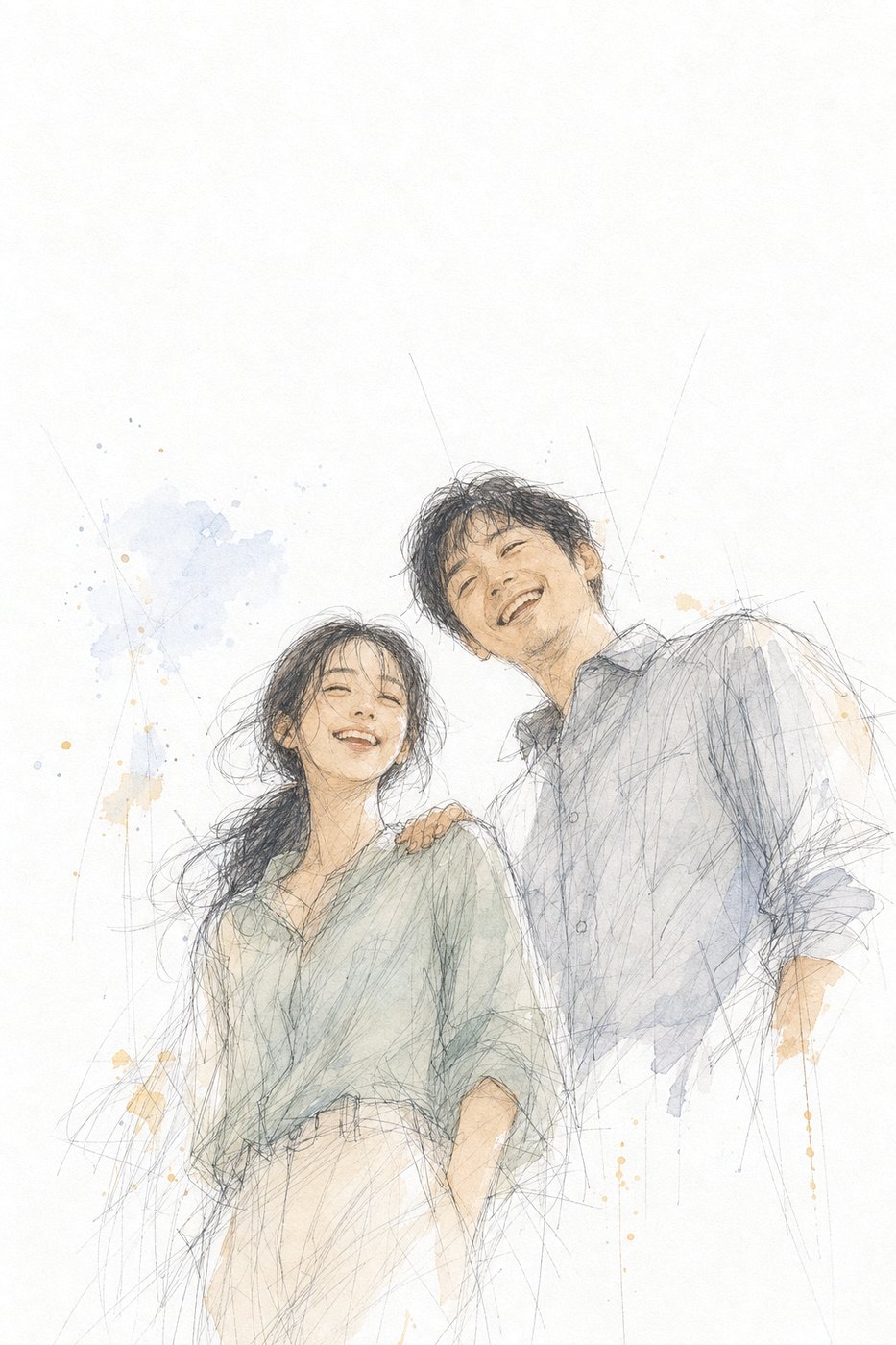
たとえば、家族の写真を撮るとき。
愛情は、どの瞬間に顔を出すのか。
手の動き、顔の表情、視線の先。
目が合えば、自然と笑い出してしまう。
手をつなげば、ぬくもりが伝わってくる。
ハグをした瞬間の顔、見つめ合ったときの顔。
何かをした、まさにその一瞬に、
感情や思いが、爆発するように現れることがあります。
その一瞬を写真に写して、愛情や温かさとして残す。

Take a family photograph.
At which moment does love show its face?
The movement of a hand, an expression, where the eyes go.
Eyes meet, and a laugh comes out on its own.
Hands are held, and warmth passes between them.
The face in the moment of a hug, the face when two people look at each other.
In the very instant something happens,
feeling can burst to the surface.
I catch that instant in a photograph, and keep it as love, as warmth.
たとえば、香りをつくるとき。
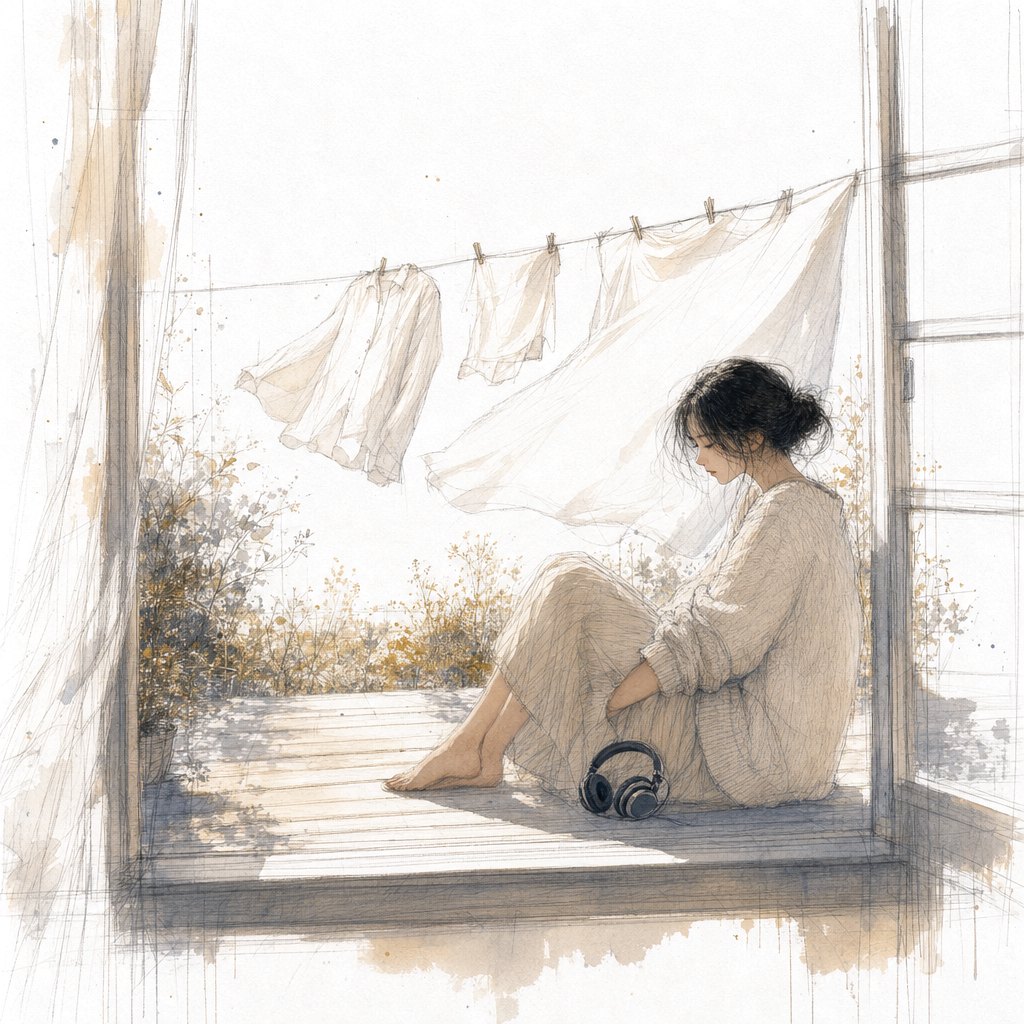
普段は気づかずに通り過ぎている、心が動く場面がある。
そこにそっと香りを置き、その瞬間を鮮明に記憶に残す。
素敵な瞬間、小さな感動は、日常にもいくつも落ちていると思うのです。

Take a fragrance.
There are moments that move us, and we walk past them without noticing.
Set a scent gently on one, and the moment stays, vivid, in memory.
Lovely moments, small stirrings of the heart, are scattered through ordinary days. I believe that.
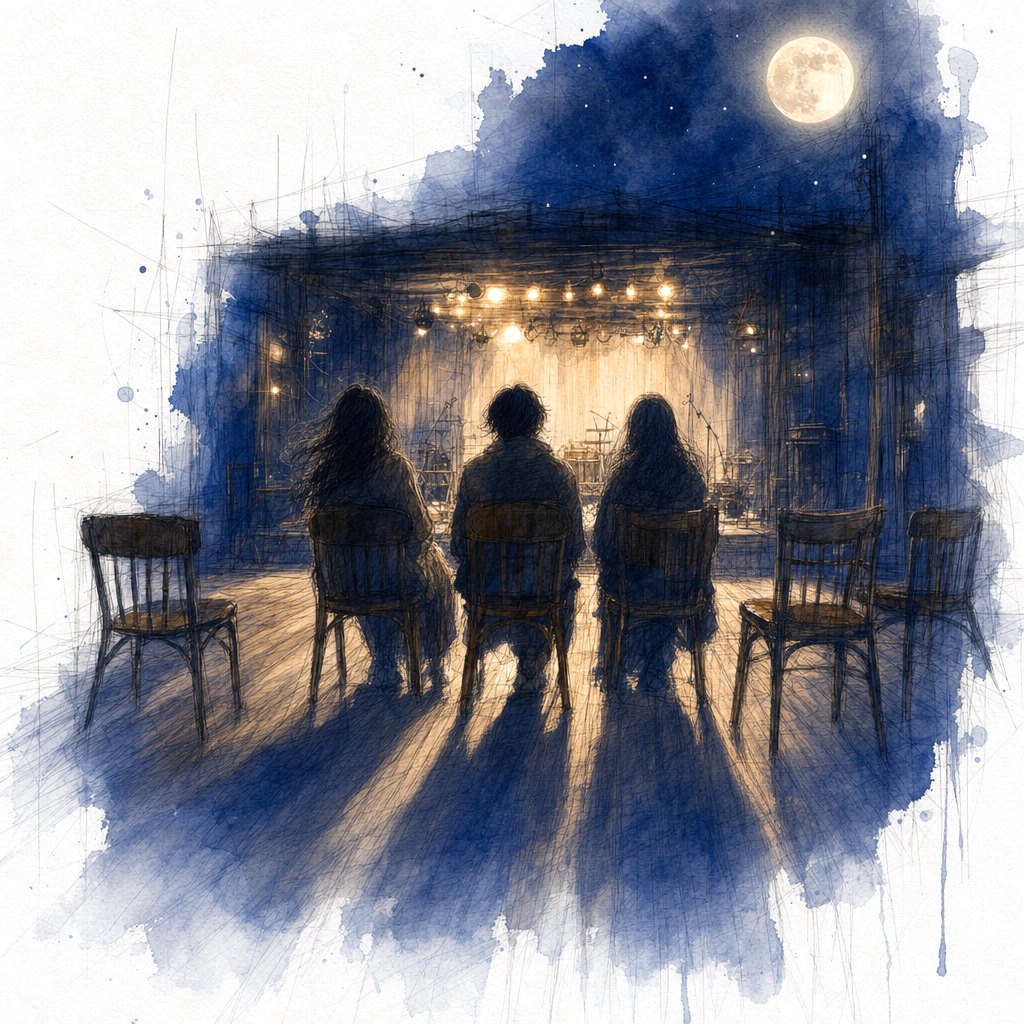
そして、ライブの客席。
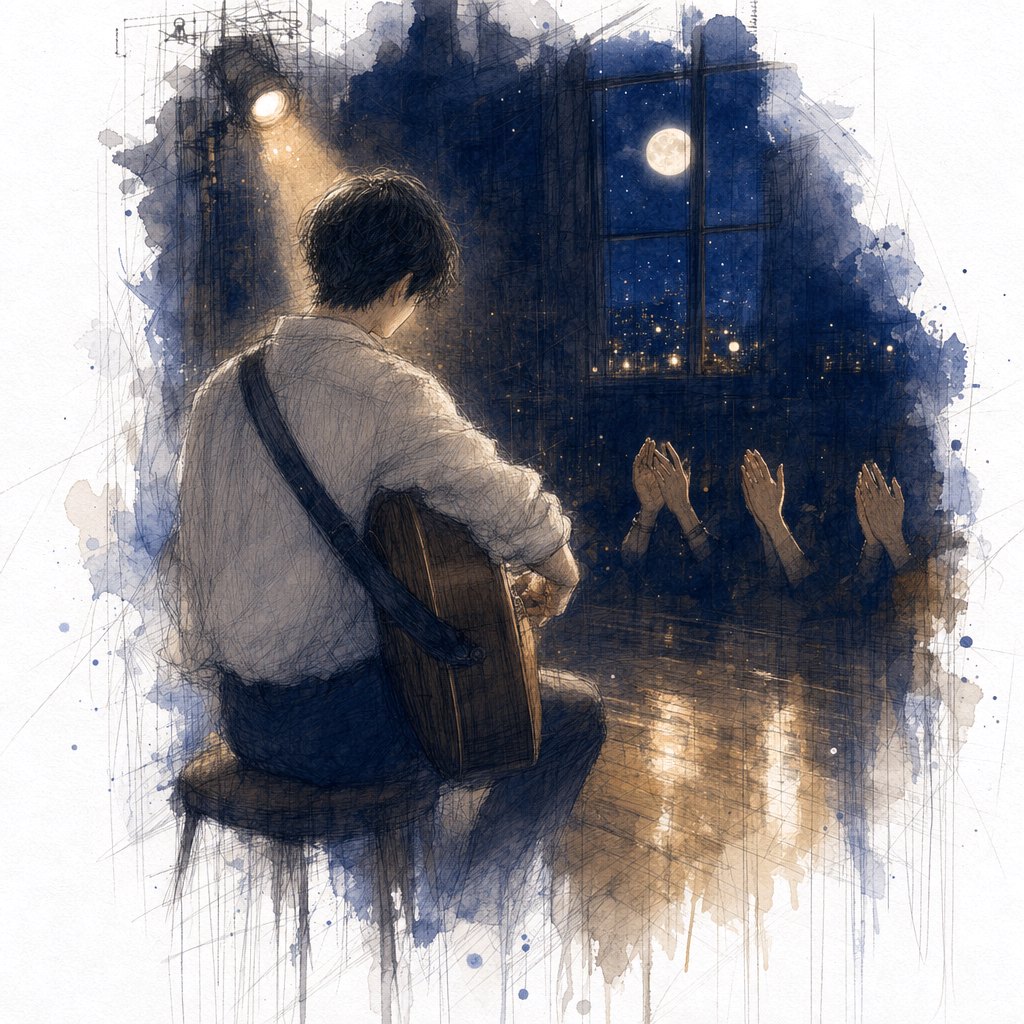
拍手や歓声だけでは、伝えきれないものがあります。
どの曲の、どの瞬間に、どれだけ心が動いたのか。
客席でたしかに起きていたはずのその出来事は、
終演の灯りとともに、言葉にならないまま消えていく。
ステージの上からは、客席の心の中は見えません。
その見えなかった部分に灯りをともすために、
観客がその場で感動の大きさを送れる仕組み、frisson をつくりました。
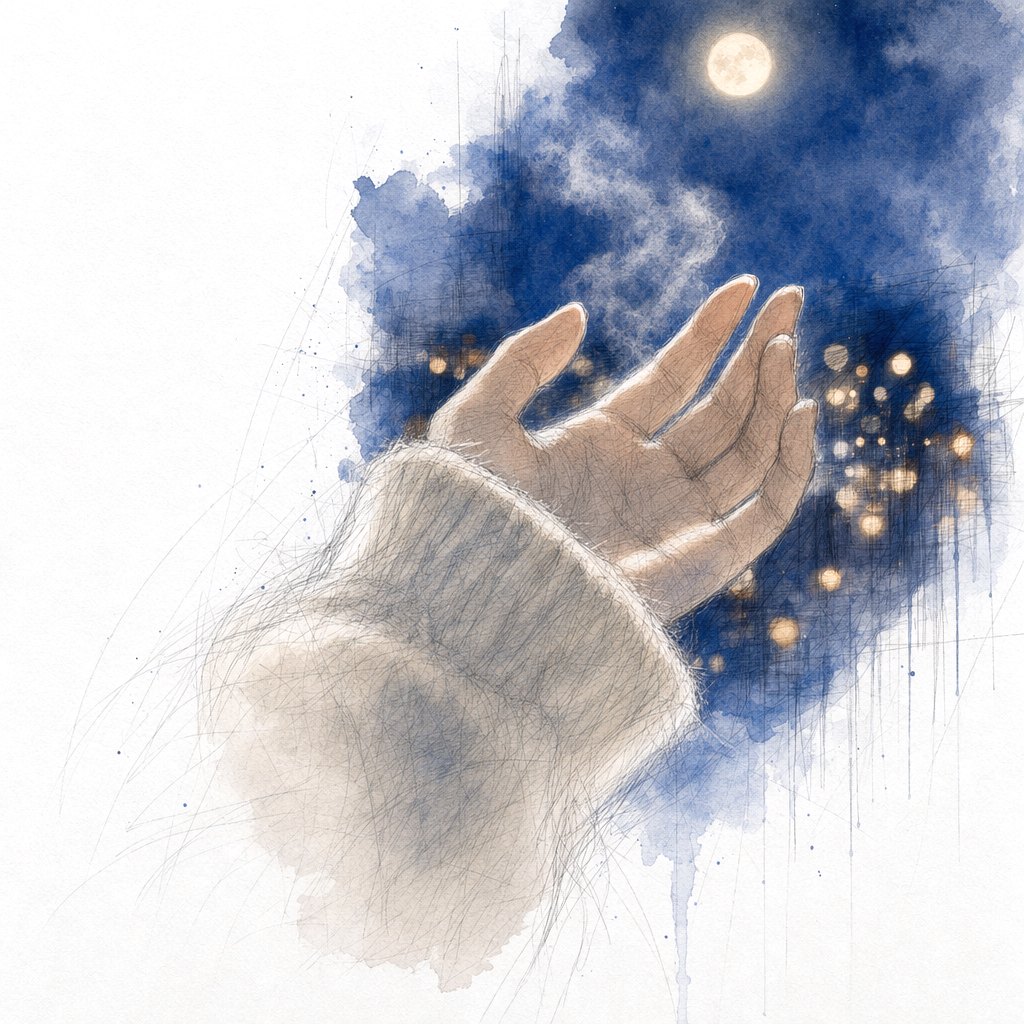
指先に置いた感動が、そのまま、歌い手や演奏者に届く。
感動は、消えるものではなくなりました。

And then, the audience at a live show.
Applause and cheers cannot carry all of it.
Which song, which moment, and how deeply the heart moved.
What surely happened in those seats
vanished with the house lights, before it could become words.
From the stage, you cannot see inside the hearts of the audience.
To bring a light to that unseen part,
I built frisson, a way for an audience to send how moved they are, right there, as it happens.
What you place on your fingertip reaches the singer and the players, as it is.
Being moved is no longer something that disappears.
写真と、香りと、仕組み。
ばらばらに見えて、追いかけている問いは、ひとつです。
感動とは、何か。

Photographs, fragrance, a system.
They look unrelated, but the question I am chasing is one.
What is it that moves us?
考えたことを、対談で話すのは向いていない。
代表の動画も、たぶん撮らない。
かわりに、詩にして、歌にして、置いておくことにしました。
そのために生まれたのが、青月です。

Talking about it in interviews does not suit me.
I probably will not film a founder's video, either.
Instead, I decided to put it into poems, into songs, and leave them here.
That is why Aotsuki was born.

わたしが詞を書き、青月が歌う。
ここにあるのは答えではなくて、
答えを探している途中の、記録です。

I write the words, and Aotsuki sings them.
What you find here are not answers,
but a record of the search, still under way.

Akira Okumura
EP「まなざし」

「まなざし」に込めたもの

写っていたのは、撮られた人だけではありませんでした。
The people in the photo were not the only ones in it.

前の二作は、見る側の静けさの話でした。
今回は、撮る側の目から始めます。

The last two EPs were about the quiet of the one looking on.
This one begins behind the camera.

ふだん、家族の写真を撮っています。
お宮参り、七五三、誕生日、結婚の前撮り。
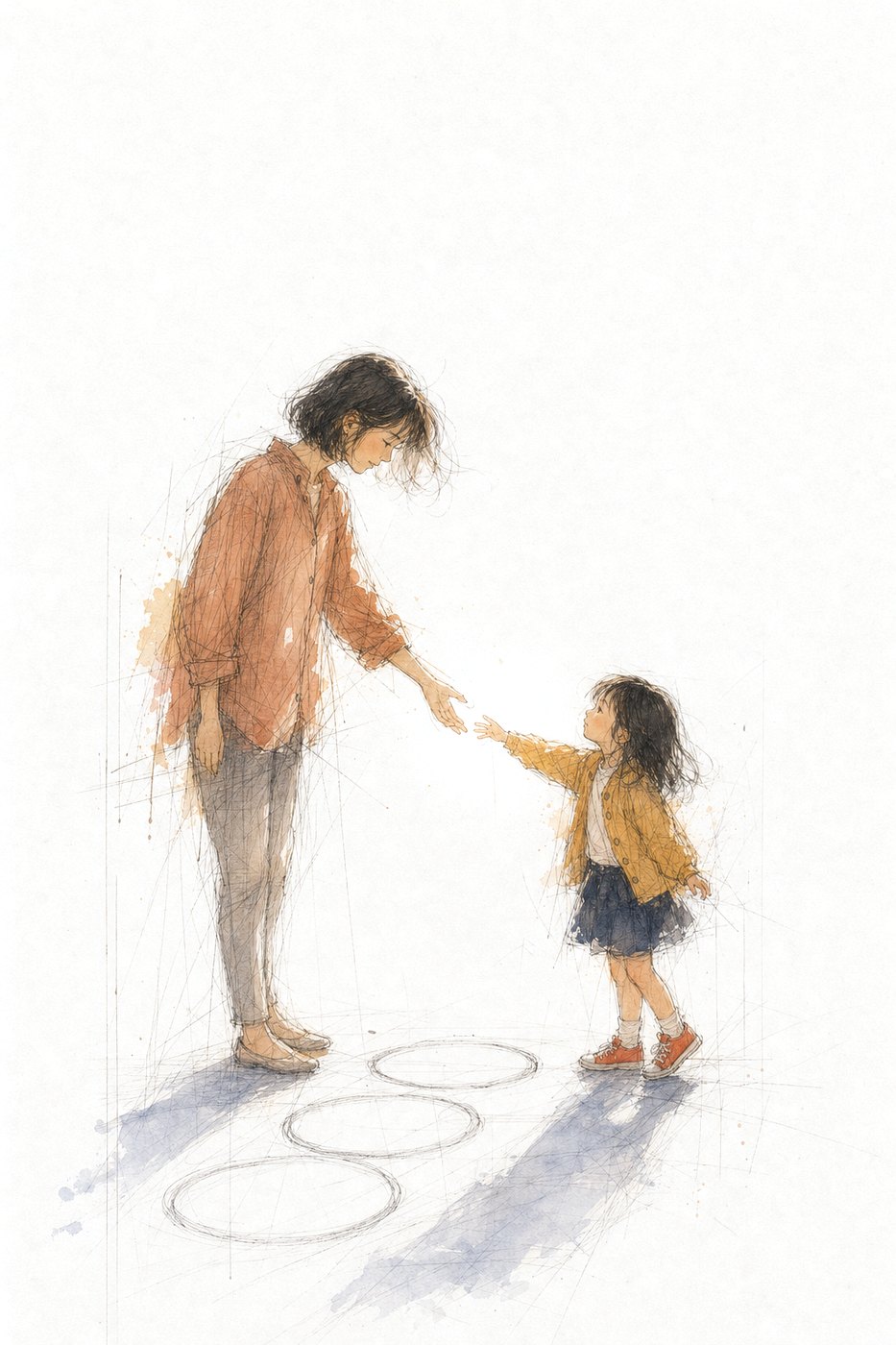
「並んでください」と言っても、子どもは並びません。
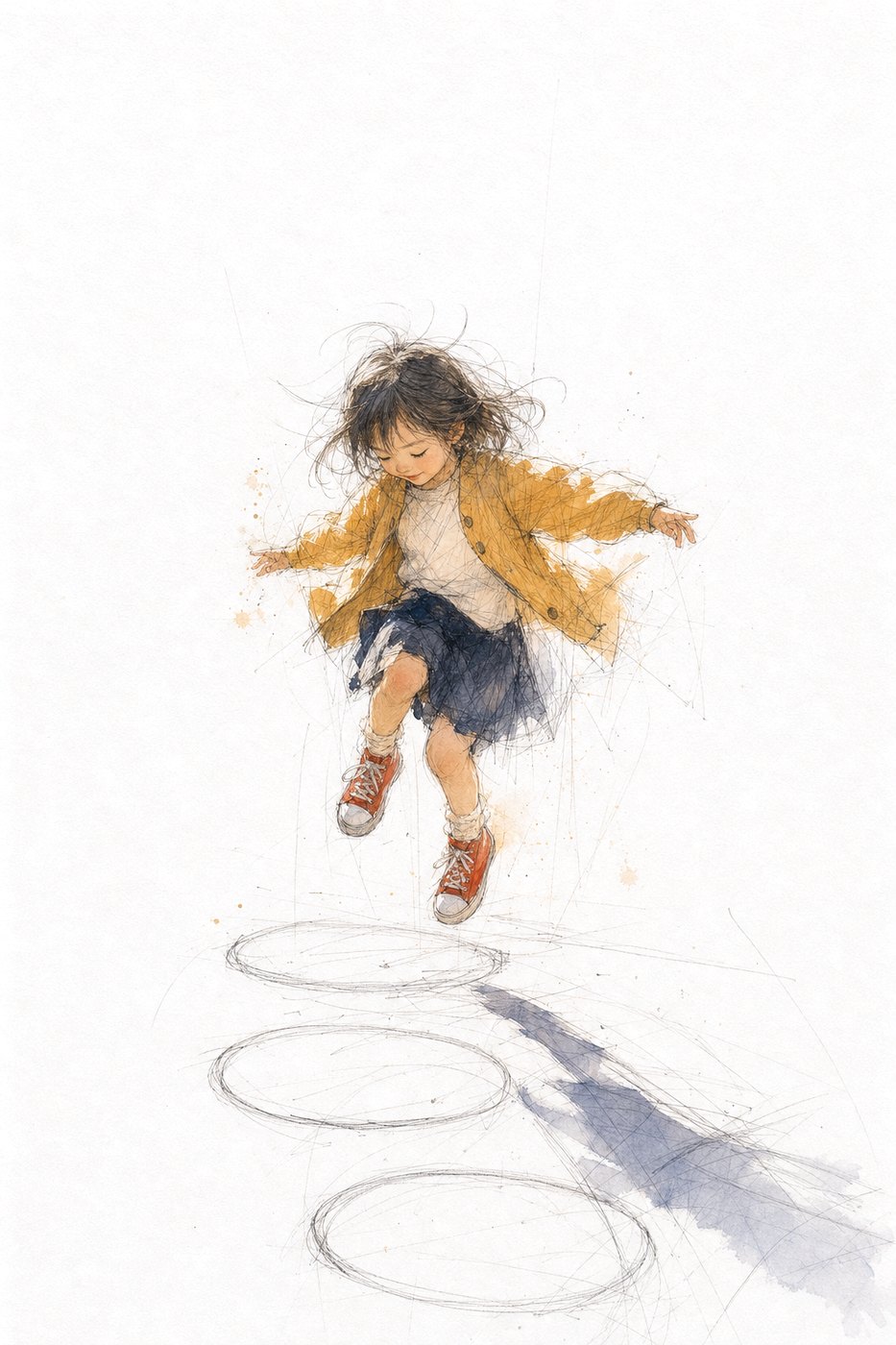
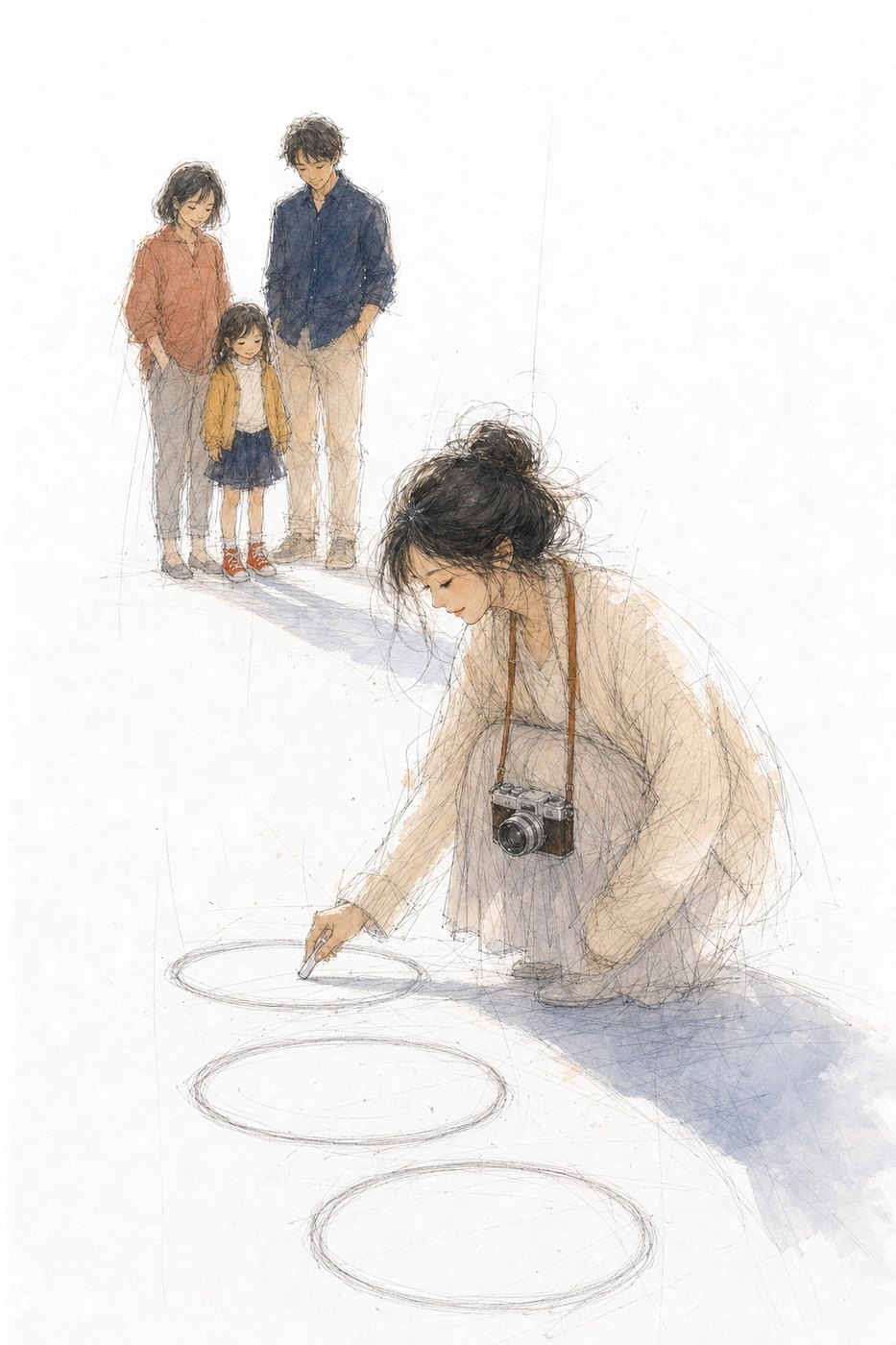
石畳に丸を三つ描いて、けん、けん、ぱ。
小さな靴が先に跳んで、そのあとの数秒に、いちばんいい顔があります。

My work is photographing families.
A first shrine visit, Shichi-Go-San, birthdays, portraits before a wedding.
Ask a child to stand in line, and the child won't.
Draw three circles on the paving stones and say hop, hop, step.
The small shoes jump first, and the best face comes in the few seconds after.

ファインダーをのぞいていると、気づくことがあります。
家族のあいだには、いつも何本もの線が引かれている。
母が子を見る線。子が父を見上げる線。父が母の横顔を見る線。
その線が重なったところで、表情がほどけます。

Looking through the viewfinder, I notice something.
Between the people in a family, there are always lines drawn.
A line from mother to child. From child up to father. From father to mother's profile.
Where those lines cross, faces soften.

写真に残るのは顔です。
けれど本当に写っているのは、その顔を見ていた誰かのまなざしなのだと思います。
子どもが押した、斜めの一枚。
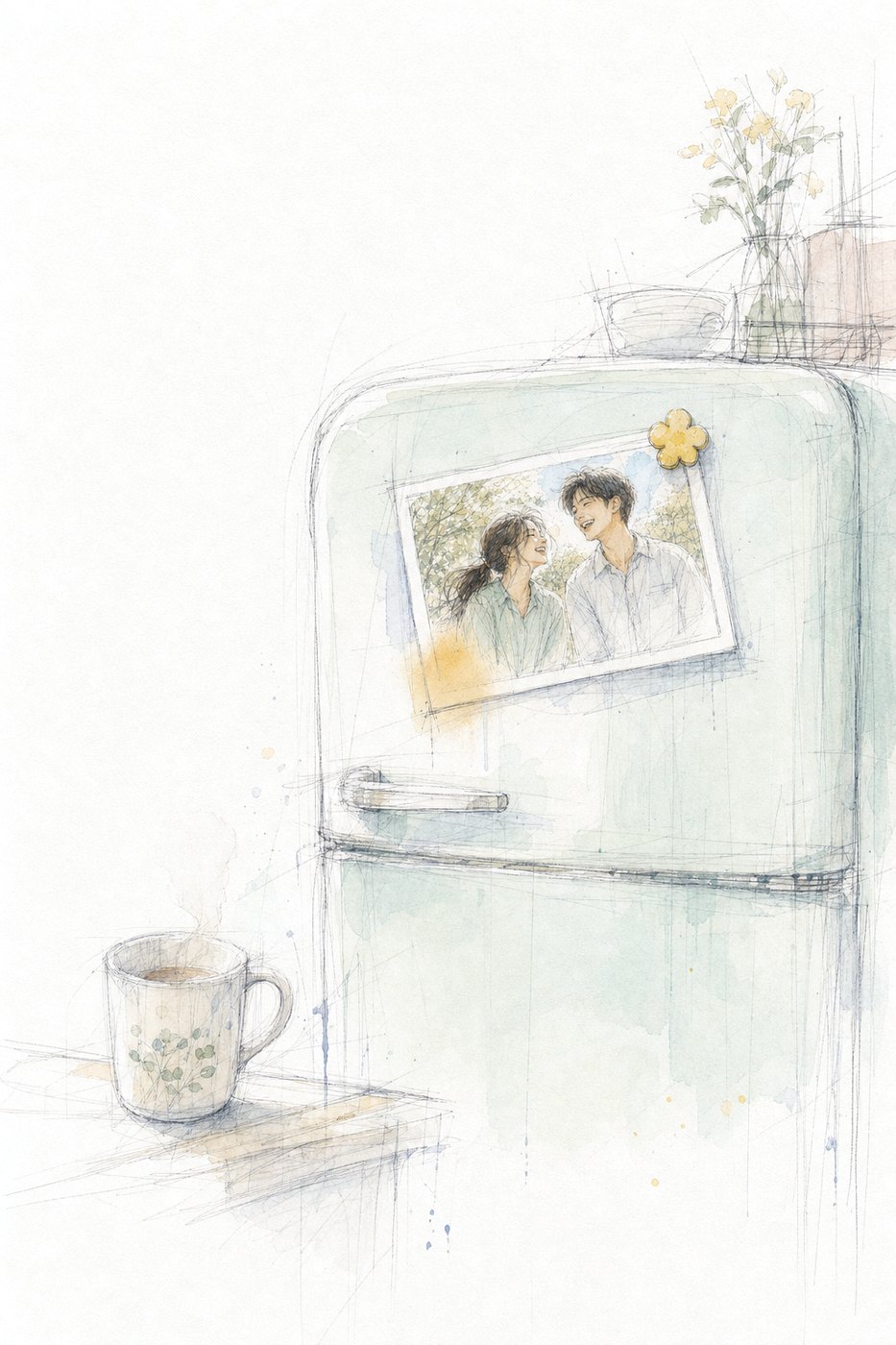
冷蔵庫の扉で、何年も笑っているふたり。
上手かどうかとは別のところに、その家族にしか撮れない一枚があります。

A photograph keeps a face.
But what it really holds, I think, is the gaze of whoever was looking at that face.
A tilted photo a child took.
Two people on the fridge door, still smiling years later.
Apart from whether it is any good, there is a picture only that family could take.

だから、「まなざし」です。
ひとりの子から、家族、節目の日、家ごとの灯り、そしてひとりの人の世界へ。
撮る範囲が少しずつ広がっていく、五つの情景と、二つの英語版。

So: Manazashi. The gaze.
From one child to a family, to the days worth celebrating, to the light of each home, to one person's world.
Five scenes, the frame widening a little each time, and two English versions.

Akira Okumura

EP「余白」

「余白」に込めたもの

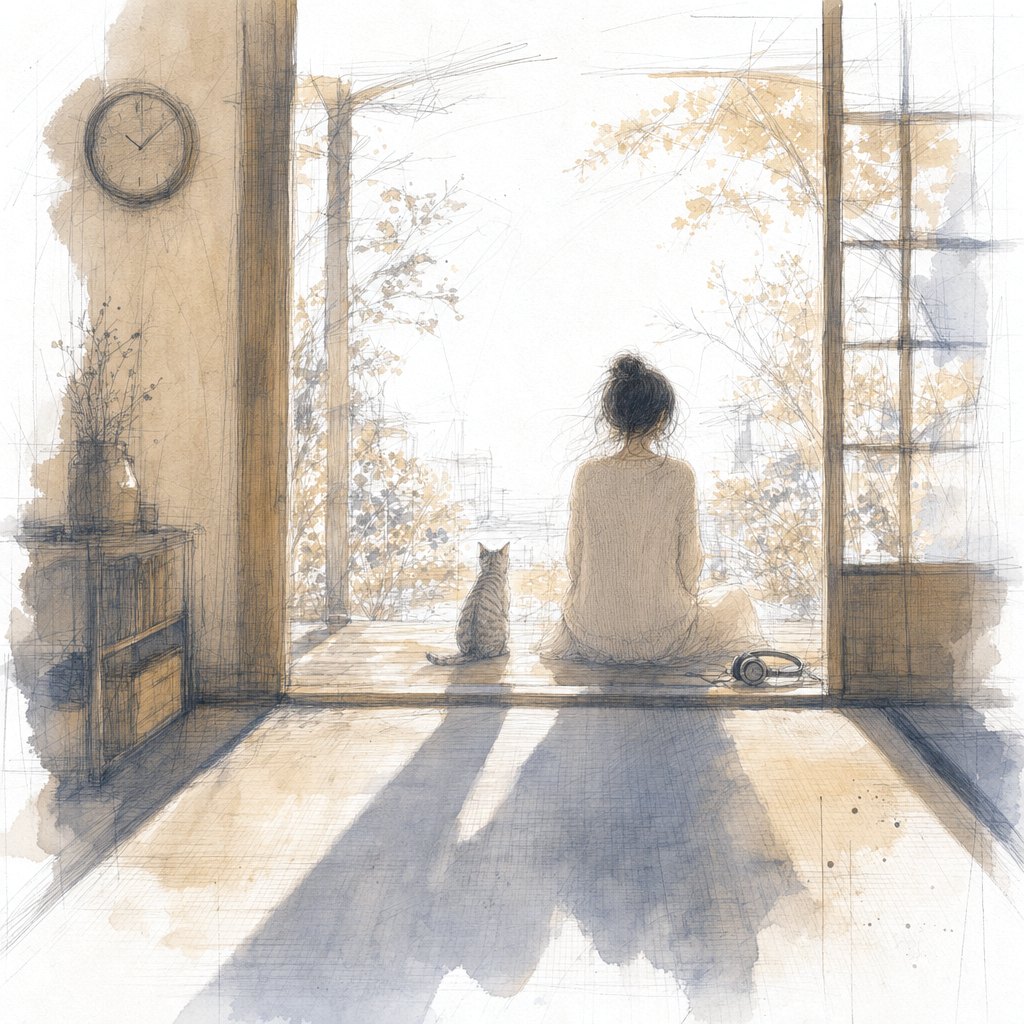
なにもしなかった午後にも、ちゃんと名前がありました。
Even an afternoon of doing nothing had a name of its own.

前作は、夜の話でした。
今回は、昼から始めます。
縁側。雨の日の軒下。夜の高い道。草原。
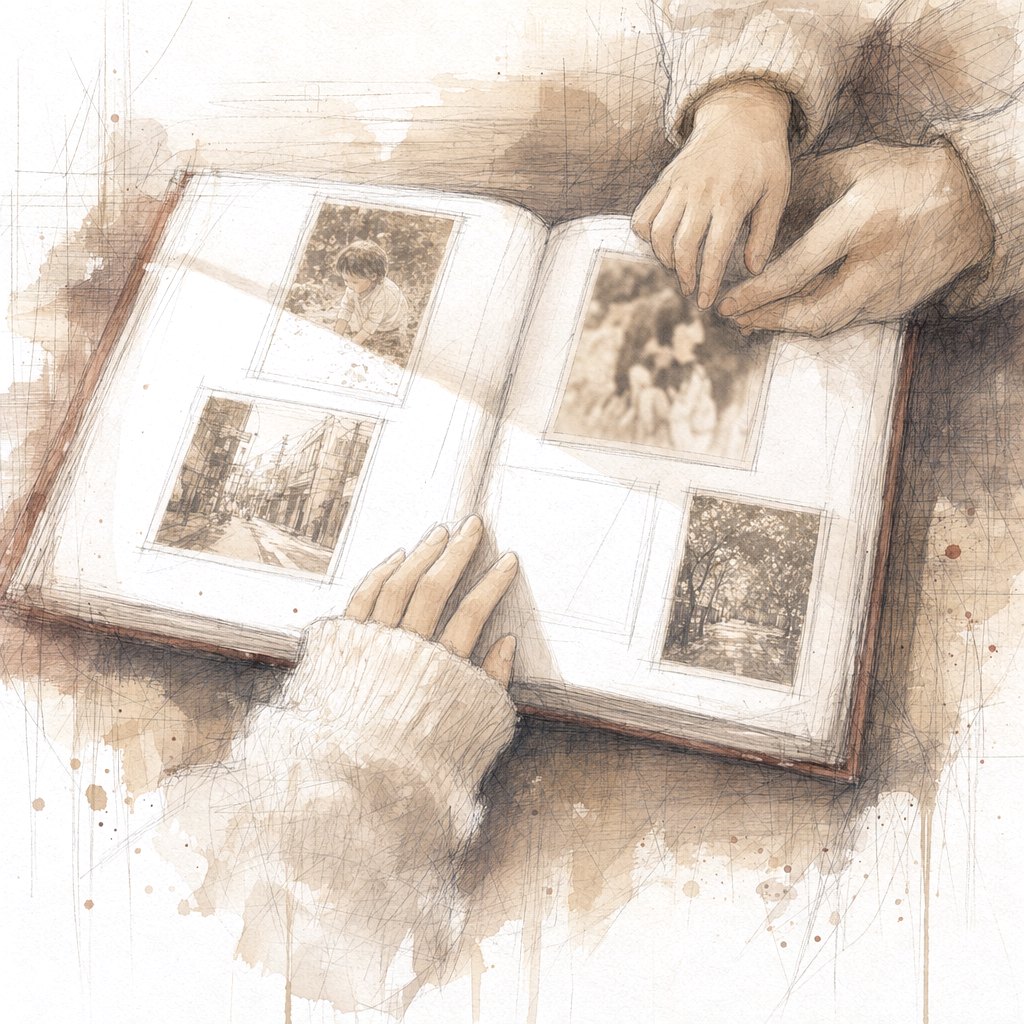
そして、机の上のアルバム。

The last EP was about nights.
This one begins at noon.
A veranda. The eaves on a rainy day. A high road at night. A field of grass.
And an album on a desk.

五つとも、予定の外で起きたことです。
なにもしなかった午後。傘を忘れた日。
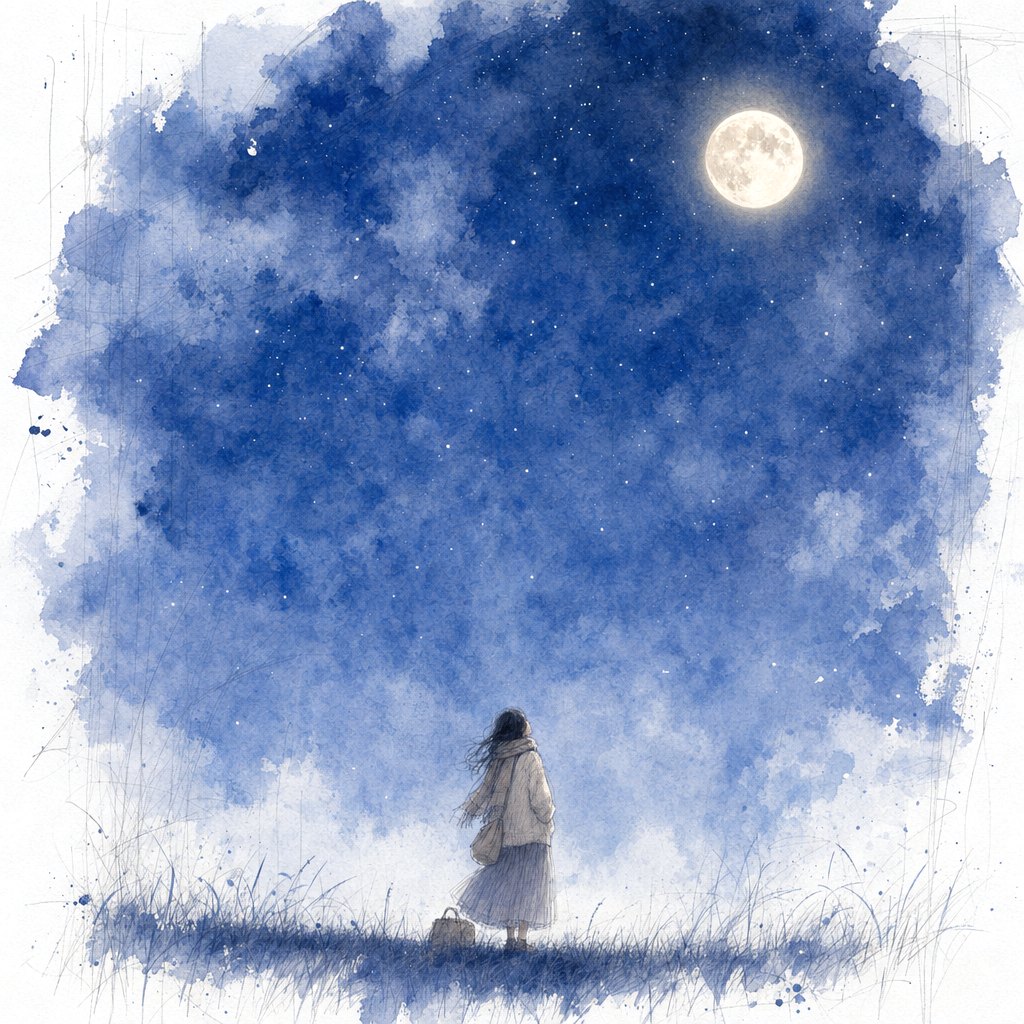
遠回りを選んだ夜。立ち止まって見上げた空。
まだ何も貼られていない、白いページ。

All five happened outside the plan.
An afternoon of doing nothing. A day I forgot my umbrella.
A night I chose the long way home. A sky I stopped to look up at.
A white page with nothing on it yet.

予定の外の時間を、一語で言うと「余白」でした。
紙の、白いところ。
なにも描かれていない、けれど、絵の一部であるところ。

The word for time outside the plan turned out to be "yohaku".
The blank of the paper.
Where nothing is drawn, and yet it is part of the picture.

絵を描くときも、紙の白をできるだけ残しています。
色で埋めてしまうと、見る人の入る場所がなくなるからです。
歌も、同じだと思っています。

When I draw, I leave as much of the paper white as I can.
Fill it with colour and there is nowhere left for the viewer to enter.
I think songs work the same way.

だから、「余白」です。
通り過ぎていたものに、立ち止まって気づいた時間を、五つ。

So: Yohaku. The margin.
Five moments of stopping to notice what I had been walking past.

昼から夜へ、五つの情景と、二つの英語版。
うまくいった話は、今回もありません。
それでも残る時間のことを、歌にしています。

From noon to night, five scenes and two English versions.
Once again, none of them are stories about things going well.
And still, these are the hours that stay. I have made them into songs.

Akira Okumura

EP「ふるえ」

「ふるえ」に込めたもの

揺れる声は、なんだか居心地がよくて、つい聞き入ってしまう。
A voice that trembles feels strangely like home. I find myself listening in.

このアルバムの裏には、ひとつの仕組みがあります。
客席で、スマホの画面を指でなぞって、
いま胸にある感動の大きさを、そのまま送る。
終演のあと、その夜が、全員の手元に返ってくる。
frisson と名づけました。

Behind this EP is a system.
In the audience, you trace your finger across your phone
and send, as it is, how much your heart is moving right now.
After the show, that night comes back into everyone's hands.
I named it frisson.

会場で、見てきたことがあります。

There are things I have seen in those rooms.

音が増えたときより、減ったときに、人は動きます。
客席に三人しかいなくても、三人の手は、ちゃんと動きます。
最後の一音が消えたあとの数秒に、いちばん大きな山が立ちます。

People move not when the sound swells, but when it falls away.
Even with only three people in the seats, those three hands move, without fail.
In the seconds after the last note fades, the highest peak rises.

見えないはずのものを、人は肌で受け取っています。
鳥肌が立つ。息が止まる。声が、すこし揺れる。
旋律からこぼれたところに、
その夜のいちばん大事なものが、乗っている気がします。

People receive, through their skin, what should be invisible.
Goosebumps. A held breath. A voice that trembles, just slightly.
It is in what spills over from the melody
that the most important thing about that night seems to rest.

だから、「ふるえ」です。
揺れてしまう瞬間を、そのまま残すことにしました。

So: Furue. Tremble.
I chose to keep the moments that waver, just as they are.

五つの夜と、二つの英語版。
うまくいった話は、ひとつもありません。
それでも長く残る夜のことを、歌にしています。

Five nights, and two English versions.
Not one of them is a story about things going well.
And still, these are the nights that stay. I have made them into songs.

Akira Okumura